What are shares?
Shares let you own a small piece of a real company. Learn how they work, how investors make money from them, and the risks to know before you start.
What are shares?
Shares are one of the most common ways to build wealth, and are a staple of investor portfolios around the world.
Shares, also known as stocks, represent partial ownership in a company. When you buy a share, you’re buying a small piece of ownership in a real company.
Investors who own shares are called shareholders.
As a shareholder, you get to:
- Benefit from capital growth as the business (hopefully) becomes more valuable over time
- Earn income in the form of dividends that the company decides to pay
- Vote in company meetings and on other important decisions (if you feel like it)
How do shares work?
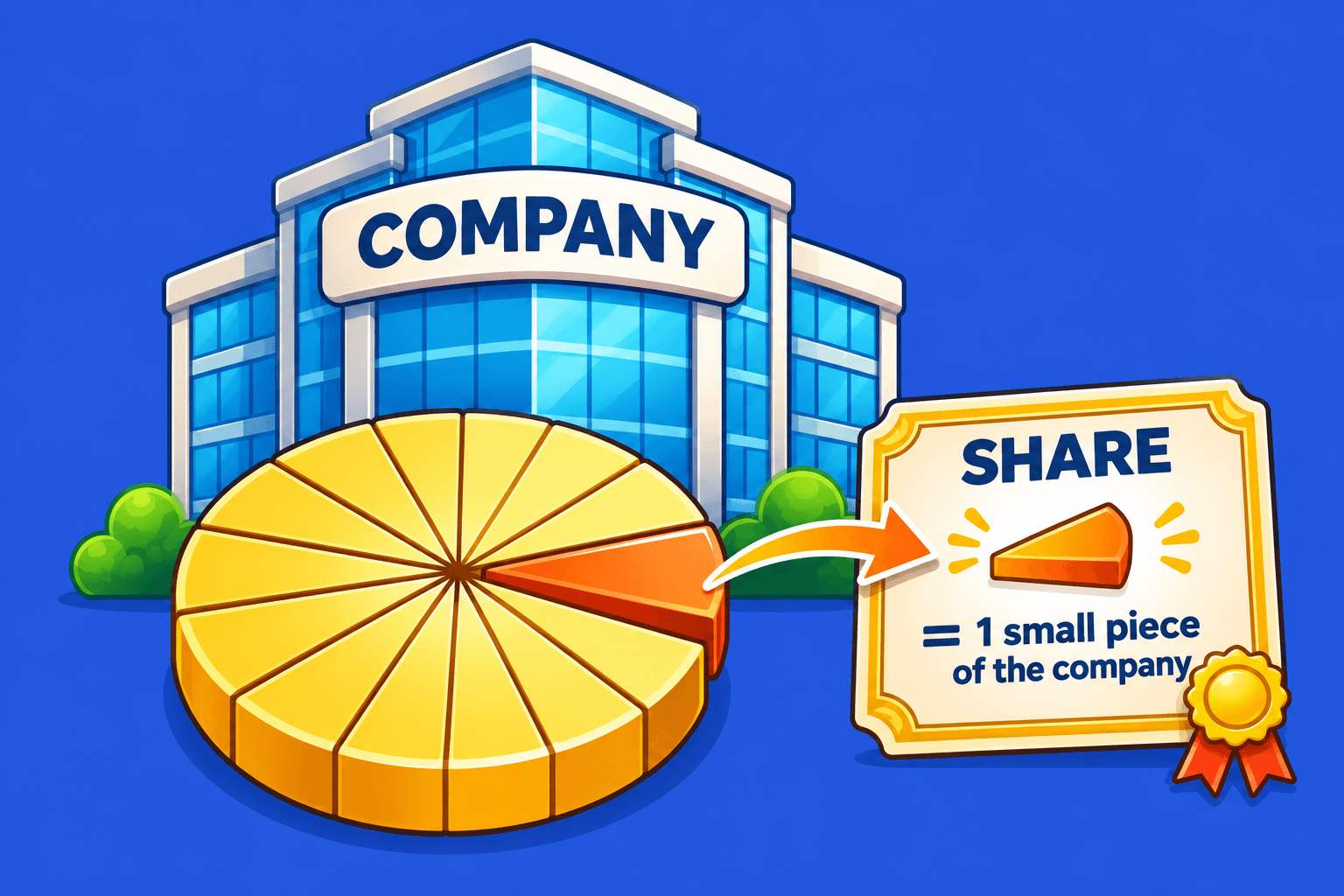
Businesses generally need money to grow. And when a business wants to raise money, one way it can do so is by selling shares.
The company splits itself up into lots of little pieces and lets investors buy those pieces from it.
Investors can then buy and sell these shares between each other on a share market, such as the Australian Securities Exchange (ASX).
Where do share prices come from?
The price of a share changes, sometimes rapidly, as investors trade with each other.
Just like most things that trade on a market, the price of a share comes down to supply and demand.
If lots of people want to buy a company's shares (perhaps because the business is doing well), the price goes up. If lots of people want to sell, the price goes down.
Why invest in shares?
There are two ways investors make money from shares.
- Growth. When investors buy shares, they generally hope that the business does well. When that happens, share price tends to rise and the investor can profit by selling their shares at a higher price than they bought them.
- Income. Companies can choose to share some of their profits with their owners in the form of dividends. Dividends are a direct payment from the company to its shareholders.
Whether a company focuses on growth or pays dividends often depends on its stage.
Younger companies often choose to reinvest their profits in their businesses instead of paying dividends. In these cases, investors generally expect to profit from long-term growth rather than dividend income.
On the other hand, older or more mature companies may have less room to grow, and often choose to pay dividends instead.
There are many types of companies whose shares trade on the share market. That variety can make shares attractive to investors looking for growth, income, or a little bit of both.
Are shares risky?
Shares are considered a risky type of investment.
Share prices go up and down, sometimes a lot.
That's because their performance is tied to the performance of the underlying business. If the business does poorly, its share price tends to fall.
There are many factors that could negatively impact a business, and anticipating them is very hard:
- A new competitor could come along and sell the same thing for less.
- Consumer preferences could change and people may no longer want what the business is selling.
- The economy may slow, bringing economic activity down across the board.
If the business goes bankrupt, share price could fall to $0, in which case you would lose your entire investment (it’s rare but does happen).
On the other hand, if the business does well, its share price can rise a lot over time. That potential for growth is why many investors accept the ups and downs.
The bottom line
A share is a small piece of ownership in a company, which you can buy and sell on a share market like the ASX.
Shares can make you money in two ways: a rise in price, and dividends paid from the company’s profits.
Share prices tend to go up and down with the performance of the underlying business. This makes shares a risky investment but can also lead to strong long-term growth, a trade-off many investors are willing to make.
This article is intended for educational purposes only. The information provided is general in nature and does not consider your personal financial circumstances. Please consult a licensed financial adviser if you require advice.